ON THIS PAGE

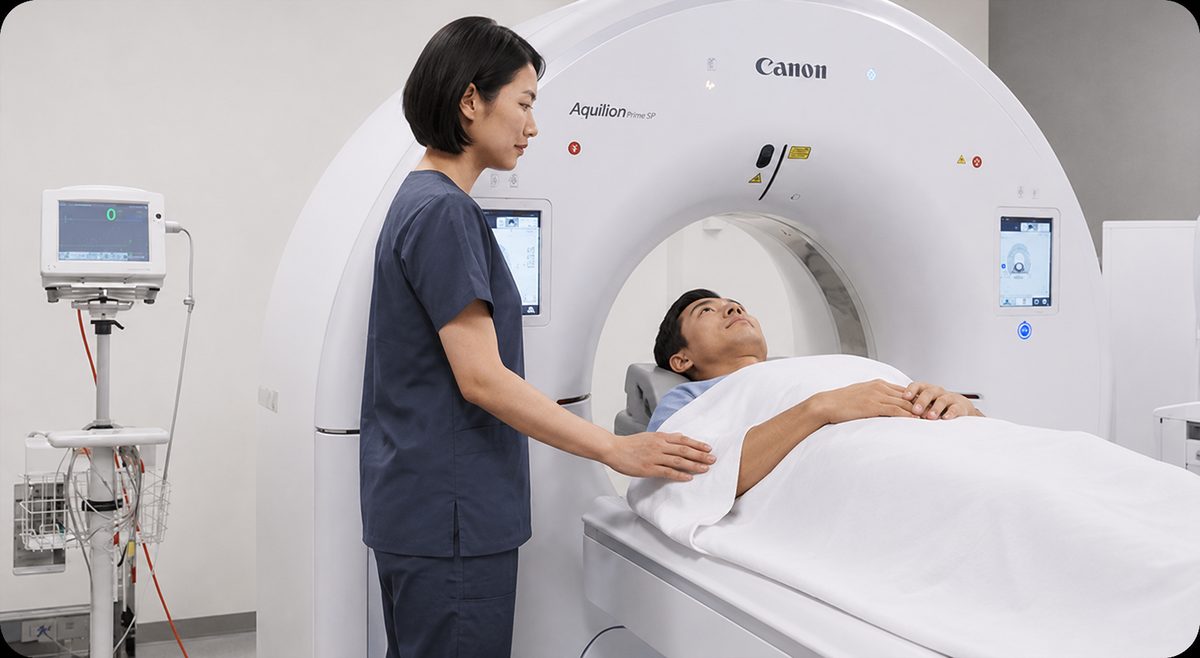
A CT scan takes detailed pictures of the inside of your body in cross-section, or "slices". Unlike conventional X-rays, which produce 2D images, a CT scan uses a series of X-ray beams taken from different angles around your body. These images are then processed by a computer to create highly detailed 3D representations of bones, blood vessels, and soft tissues. At Scope Radiology in Clayton, we use a low-dose CT scanner.
How Does a CT Scan Work?
A CT scanner is a large, doughnut-shaped machine. You lie on a motorised table that slides through the opening. As the table moves, an X-ray tube rotates around you, emitting narrow beams of X-rays. Detectors on the opposite side of the scanner measure the X-ray beams that pass through your body. A computer then processes this data to generate cross-sectional images, or “slices,” of the area being examined. These slices can be viewed individually or stacked together to create a comprehensive 3D view.
Contrast Material
Sometimes, a contrast material (dye) is used to enhance the visibility of certain structures, such as blood vessels, organs, or tumours. This contrast can be given orally, rectally, or most commonly, intravenously (injected into a vein). If contrast is required for your scan, our staff will provide specific instructions and check for any allergies.
Common Uses of CT Scans
CT scans are used to look at many parts of the body, for example:
- Diagnosing Bone and Joint Problems: Detailed images of complex fractures, tumours, and degenerative conditions.
- Detecting Cancers: Identifying the presence, size, and location of tumours, and monitoring cancer treatment effectiveness.
- Injuries: Looking for fractures or other injuries after a fall or accident.
- Blood vessels: CT with contrast dye can show blood vessels, including the arteries that supply the heart (CT Coronary Angiography, CTCA).
- Head and spine: Looking at the brain, spine and discs when your doctor needs more detail.
Preparing for Your CT Scan
Preparation for a CT scan varies depending on the area being examined and whether contrast material is used. Our team will provide you with specific instructions, but general guidelines include:
- Fasting: For most CT scans you can eat and drink as usual. If your scan uses contrast dye, you will usually be asked not to eat for about 4 hours beforehand, but you can keep drinking water.
- Medications: Continue to take your regular medications unless advised otherwise by your doctor.
- Clothing: Wear loose, comfortable clothing. You may need to remove jewellery, glasses, and any metal objects, and potentially change into a gown.
- Allergies: Tell our staff about any serious allergies, or if you have ever reacted to contrast dye or iodine.
- Pregnancy: Tell us before your appointment if you are pregnant or think you might be. CT uses radiation, which can harm an unborn baby, so we need to know before your scan.
- Referral: Please bring your referral letter from your GP or specialist.
What to Expect During the Procedure
When you arrive at Scope Radiology Clayton for your CT scan:
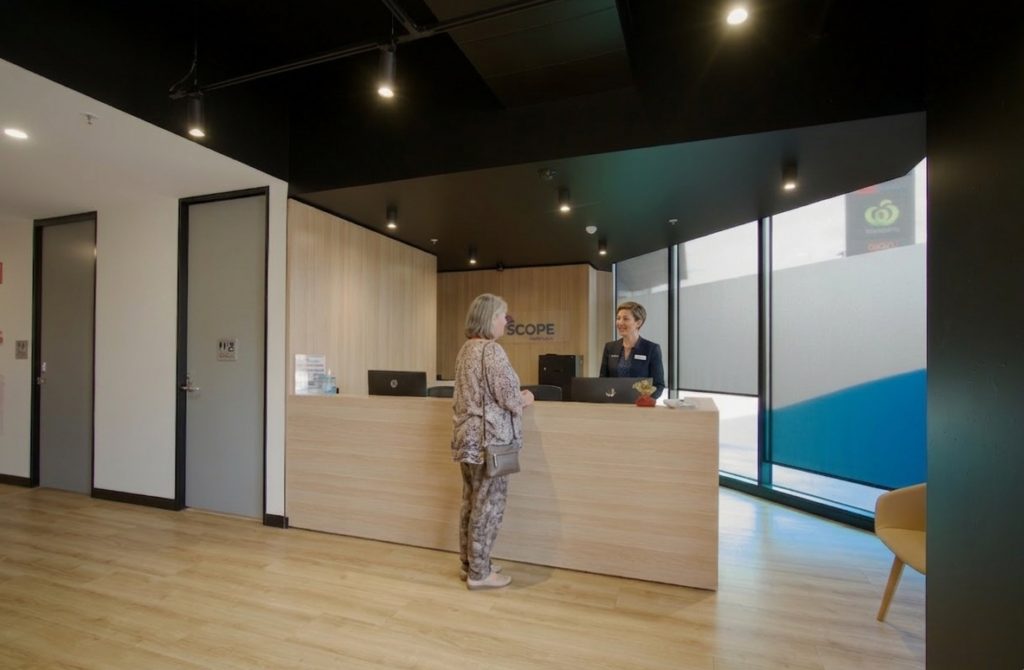
- Check-in: Our reception staff will confirm your details and referral.
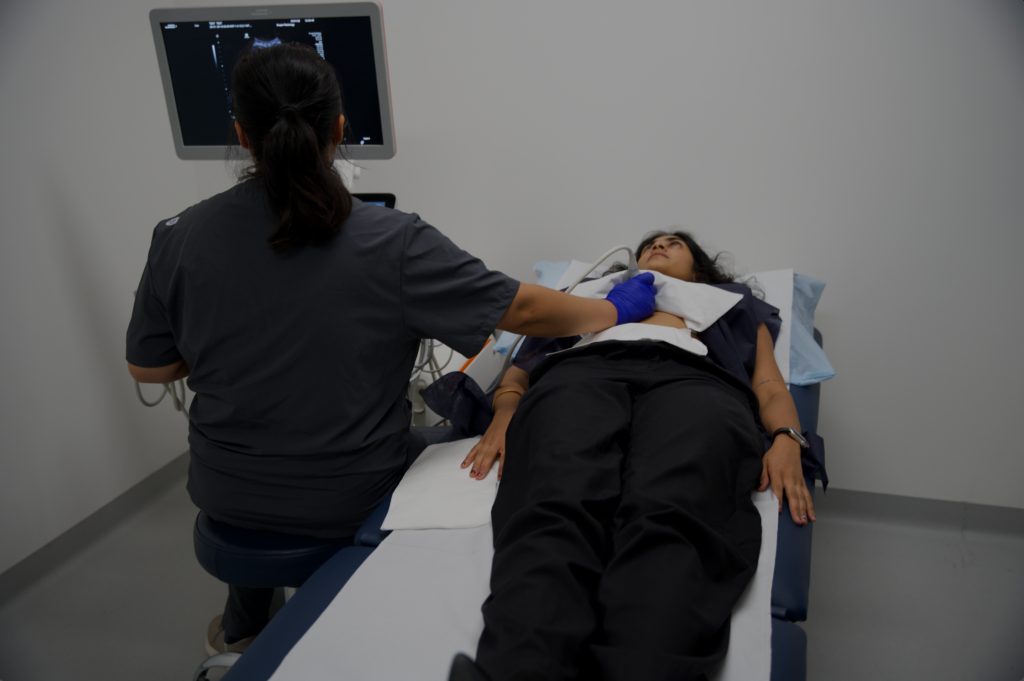
- Preparation: A qualified radiographer will explain the procedure, answer your questions, and position you on the CT table. If intravenous contrast is needed, an IV line will be inserted.
- The Scan: The table will slide into the scanner. You will need to lie very still and may be asked to hold your breath briefly at certain times. The radiographer will monitor you from an adjacent room and communicate via an intercom.
- Duration: Most CT scans are relatively quick, typically taking 10 to 30 minutes.
Your Results
After your CT scan, a radiologist reviews the images and writes a report. It is usually sent to your referring doctor within 24 to 48 hours. Your doctor will discuss the findings with you and outline any necessary next steps for your treatment or management plan.
This article is general information only. It is not a substitute for individual medical advice. Please speak with your doctor about your own circumstances.
Frequently asked questions

No, a CT scan itself is not painful. You will lie still on a table, and the process is generally comfortable. If contrast dye is injected, you might feel a brief warm sensation or a metallic taste in your mouth, which quickly passes.
CT scans use a small dose of radiation. Your referring doctor will decide whether the scan is right for you, and we keep the dose as small as practical.
For most CT scans you can eat and drink as usual. If your scan uses contrast dye, you will usually be asked not to eat for about 4 hours beforehand, but you can keep drinking water. We send the exact instructions when you book.
Our radiologists will interpret your CT images and send a detailed report to your referring doctor, usually within 24 to 48 hours. If something needs attention sooner, the radiologist contacts your doctor directly.
CTCA stands for CT Coronary Angiography. It uses contrast dye to show the arteries that supply the heart, so your doctor can check for narrowing or blockages. We offer CTCA with a referral from your GP, cardiologist or specialist.